Quinn Zimmermann · 24 September 2026
Acoustic Mapping Uncovers Hidden Communication Patterns Among Canopy Dwellers in Heritage Tree Clusters
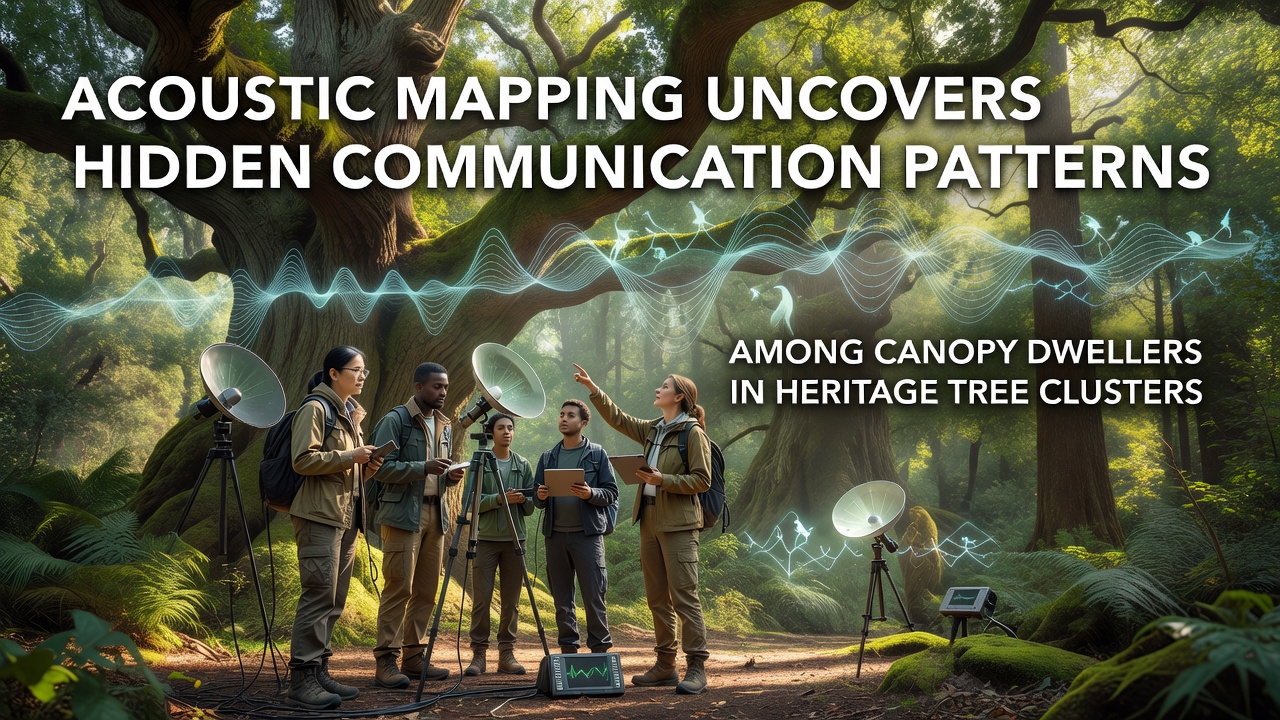
Acoustic mapping technologies have revealed intricate communication networks among birds, insects, and small mammals living in heritage tree clusters across protected woodlands, and data collected through arrays of microphones placed at multiple canopy levels shows consistent patterns of vocal exchanges that align with seasonal changes and environmental stressors. Researchers from several institutions deployed these systems in 2024 and continued monitoring through field seasons that extended into September 2026, when new datasets became available for cross-regional comparison.
Methods Behind the Mapping Efforts
Teams positioned directional microphones and ultrasonic recorders at heights ranging from understory layers to upper branches in clusters of old-growth trees that have remained undisturbed for centuries, and they synchronized recordings with environmental sensors tracking temperature, humidity, and wind speed to isolate biological signals from background noise. Software processed terabytes of audio to identify call sequences, frequency shifts, and response latencies that indicate directed interactions rather than random vocalizations, while geographic information systems overlaid these acoustic events onto three-dimensional maps of the canopy structure.
One study coordinated by the Australian National University integrated recordings from multiple heritage sites in Victoria with similar efforts in the Pacific Northwest, and the combined dataset revealed that certain high-frequency insect stridulations triggered immediate adjustments in nearby bird foraging calls within seconds. Such timing suggests information transfer across species boundaries, and observers note that these exchanges occur more frequently during periods of resource scarcity documented in regional forestry reports.
Key Patterns Identified in the Data
Analysis of the mapped recordings identified recurring motifs in which alarm calls from one group of canopy residents prompted synchronized movement or silence in others, and these motifs repeated across different tree species and geographic locations. Data indicates that bat echolocation pulses sometimes overlap with bird contact calls in ways that correlate with reduced predation events on shared insect populations, according to figures released by the U.S. Forest Service in its 2025 acoustic ecology summary.
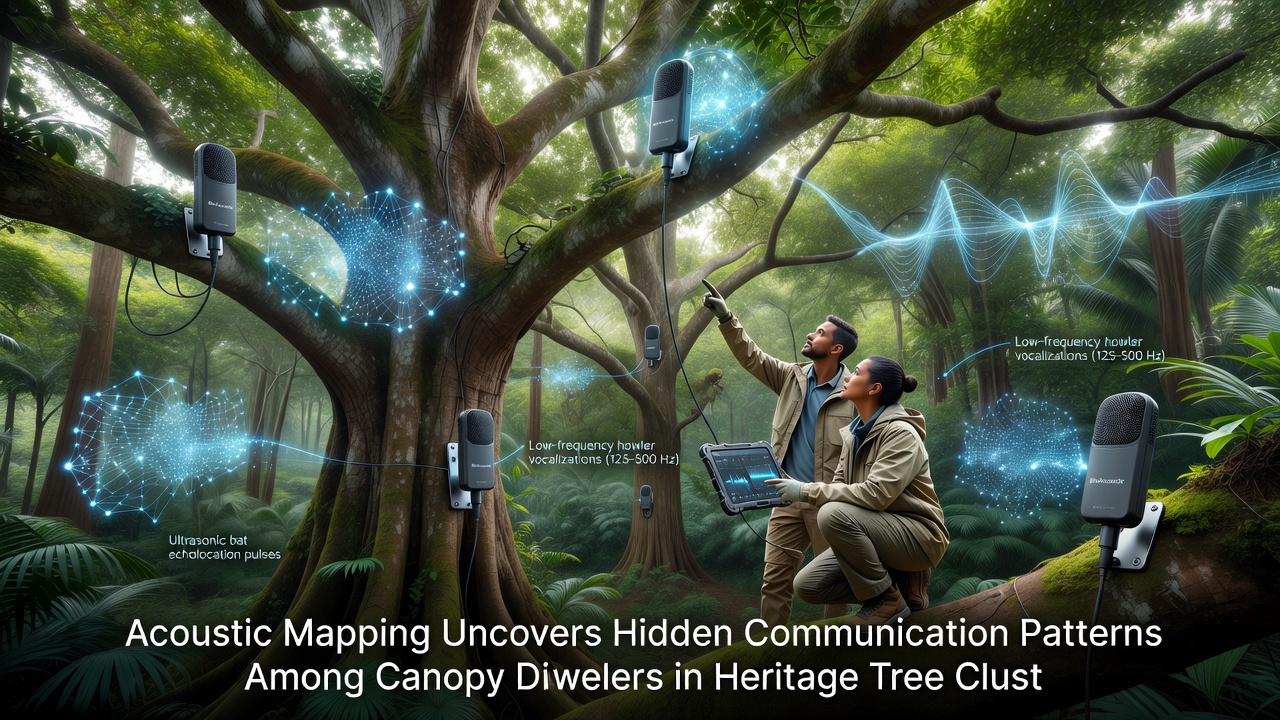
Researchers discovered that communication density increases in the weeks following heavy rainfall, when fungal growth on bark surfaces alters sound propagation, and they traced how certain low-frequency rumbles produced by larger mammals on the forest floor elicited upward shifts in the pitch of arboreal responses. These vertical linkages appear in clusters that have maintained continuous canopy cover for generations, whereas younger stands show more fragmented patterns according to the same monitoring protocols.
Implications for Conservation Planning
Heritage tree clusters now serve as reference sites for acoustic monitoring programs because their stable microclimates preserve the full range of frequencies used by resident species, and government agencies in both North America and Australia have incorporated these findings into habitat connectivity models that prioritize unbroken canopy corridors. Evidence from the September 2026 data release shows measurable declines in communication complexity when heritage clusters experience edge effects from adjacent land-use changes, prompting adjustments in buffer zone recommendations.
Long-term arrays continue to operate at selected locations, and the resulting archives allow comparison of communication rates before and after documented weather extremes such as the drought periods recorded in 2023 and 2025. Those comparisons indicate that certain call types associated with group coordination become less frequent under prolonged heat stress, while others linked to individual vigilance increase in duration.
Future Directions in Acoustic Research
Expanded networks of sensors are scheduled for installation in additional heritage clusters during the 2027 field season, and preliminary modeling suggests that machine-learning classifiers trained on current datasets can predict communication shifts up to 48 hours before visible changes in animal movement occur. Collaboration between acoustic ecologists and forestry departments has already produced standardized protocols for data sharing that respect site-specific access restrictions.
These developments build on earlier work that established baseline soundscapes for ancient woodlands, and the integration of real-time alerts now supports rapid response to disturbances such as unauthorized trail creation or storm damage that might otherwise go undetected for weeks.
Conclusion
Acoustic mapping has documented previously unrecognized layers of interaction among canopy species in heritage tree clusters, and continued collection of synchronized audio and environmental data supplies concrete metrics for evaluating habitat integrity over time. The patterns identified so far connect vocal behavior to both immediate environmental conditions and longer-term structural features of the canopy, offering measurable indicators that conservation programs can track across regions.