Mara Hughes · 10 September 2026
Fallen Timber Habitats Foster Unexpected Insect Populations in Ancient Woodlands
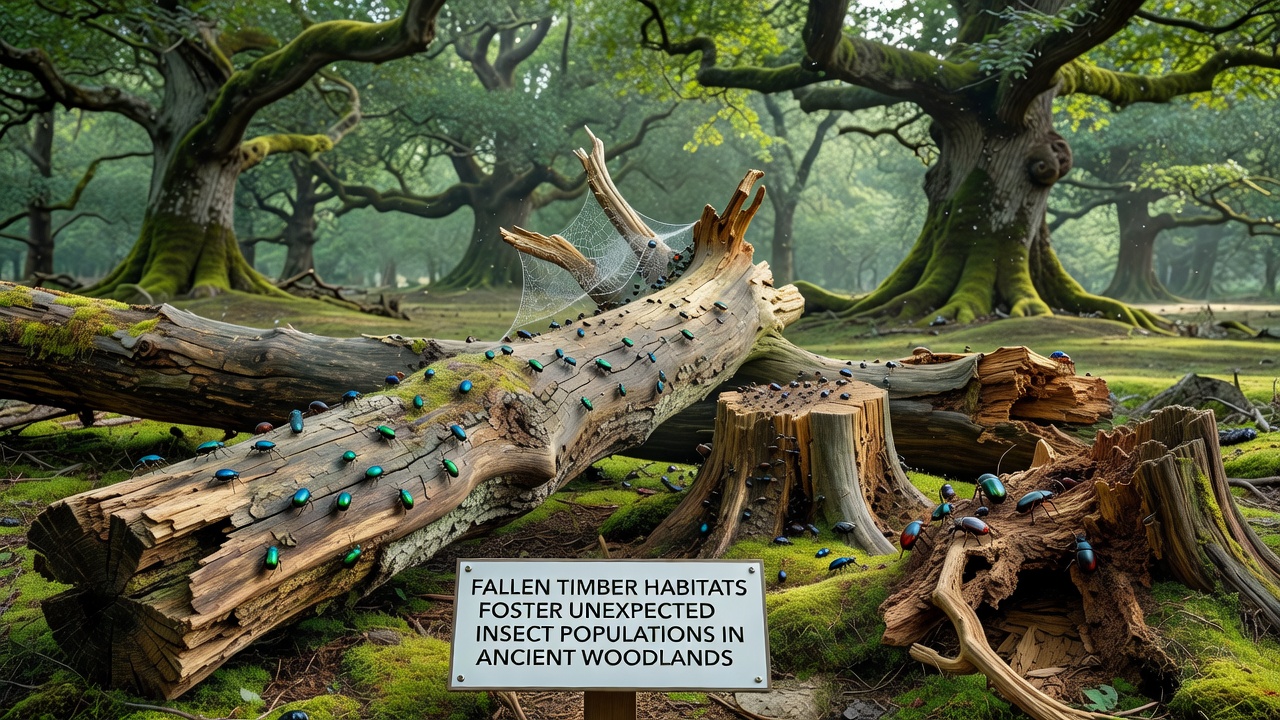
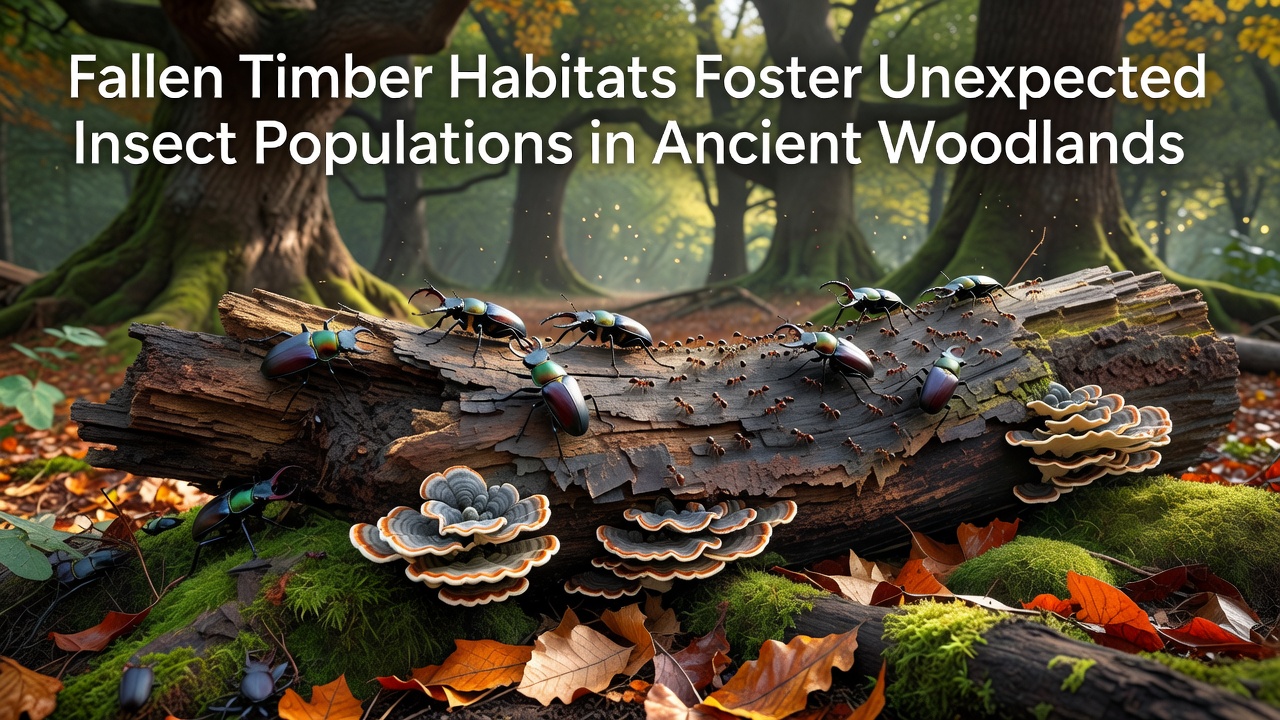
Ancient woodlands across multiple continents continue to reveal how fallen timber creates specialized habitats that support diverse insect communities. Researchers tracking these environments note that decaying wood provides moisture retention, shelter from predators, and nutrient sources unavailable in living trees. Data from long-term monitoring programs shows beetle larvae and other decomposers thrive in these conditions, often exceeding population densities found in managed forests. Studies conducted through 2026 highlight specific patterns in regions where ancient stands remain intact. In September 2026, field teams in protected areas documented higher numbers of saproxylic insects, species that depend on dead or decaying wood, compared with earlier decades. These findings align with observations from similar sites in North America and Europe, where fallen trunks host fungi that in turn attract specialized beetles and flies.Habitat Formation and Insect Dependencies
Fallen timber breaks down over years or decades, forming microhabitats through bark separation, heartwood softening, and fungal colonization. Observers note that larger logs retain humidity longer than smaller branches, allowing certain insect species to complete full life cycles without desiccation risks. Data collected by forestry agencies indicates that logs exceeding 30 centimeters in diameter support up to three times more beetle species than thinner material. Certain insects, such as longhorn beetles and stag beetles, lay eggs directly into moist wood, where larvae feed on cellulose broken down by microbes. Research from Canadian forest inventories demonstrates that these processes accelerate when timber falls naturally rather than through mechanical removal. The same inventories link increased deadwood volumes to measurable rises in hoverfly and ant populations that use the structures for nesting or hunting.Regional Observations and Species Records
Ancient woodlands in the Pacific Northwest and parts of Scandinavia show parallel trends. Teams from the U.S. Forest Service recorded elevated counts of rare click beetles in sites with high fallen timber accumulation during surveys completed before September 2026. Australian researchers, working through the Department of Climate Change, Energy, the Environment and Water, reported comparable increases in termite and wood-boring moth activity within eucalypt remnants.These patterns emerge because fallen timber connects above-ground and soil ecosystems. Insects move between layers as wood decays, transporting nutrients and spores. Evidence from university-led projects in the United Kingdom indicates that wood-decay fungi create pathways for insects to access otherwise inaccessible resources inside logs.